Named after the 5-time Le Mans winner and the first Audi to ever feature the four ring emblem on the hood instead of the grille, the production model Audi R8 is finally being readied to blast down highways, autobahns, motorways and autostradas across the world. Some three years after the unveiling of the Audi Le Mans quattro concept car, the production version made its debut at the Paris Motor Show in the guise of the new Audi R8 mid-engined sports model.
"With the launch of the R8, Audi has reached the highest level of the automotive world. The world of sports cars. We now address the most demanding group of international customers. People who want to own the most well-crafted, precision objects. In the automotive arena, the Audi R8 is such a car," said Dr. Martin Winterkorn - the main man at Audi AG - in his '06 Paris Motor Show address.
"In terms of design, for example, we have created a dress code for our cars. Audi vehicles are neither brash, nor do they seek to hide their dynamics," added Dr. Winterkorn.
"Ladies and gentlemen, the R8 project has been a very personal one. I started it when I returned to Audi as chairman in 2002. I have overseen the design and engineering teams for the past four years. Everyone has been looking forward to this day, the world premiere of our first mid-engined sports car. It is a key moment in the history of Audi," beamed Dr. Winterkorn from the 2006 Paris Motor Show.
Powered by a similar direct injection petrol V8 engine as seen in Audi's RS 4, the new R8 eschews the traditional front-mounted engine style in favour of a entirely exotic layout, placing the engine in a mid-mount position. With the 309kW (420bhp) V8 FSI engine beating away behind the driver, the new vehicle is expected to attract an all-new type of buyer to the Audi brand.
Other standout features of the stunning German coupe include quattro permanent four-wheel drive and the use of an Audi Space Frame aluminium body, both of which form the basis for truly outstanding driving dynamics.
Audi says the new Audi R8 will be available to order from 28 September 2006 for European customers, with the first deliveries to be made in the first half of 2007.
As the first Audi mid-engined sports car, the R8 combines Audi's experience gained from numerous motorsport triumphs with groundbreaking design and the acknowledged technological expertise of the brand. This expertise has led to the slogan 'Vorsprung durch Technik' (which roughly translates to 'Advancement Through Technology') becoming a byword for leading-edge technology both on the race track and on the road.
The Le Mans 24-hour race is without doubt the toughest challenge to the Audi Sport Team's engineers because it calls for a level of engineering going far beyond the need merely to keep all the systems focussed on a short, sharp sprint. Alongside the essential virtues of top performance and optimised driving dynamics, the key requirements in long-distance racing are endurance and reliability, allied with optimum ergonomic design.
And now Audi is proud to show that these are genes have been transferred to a road-going sports car, which is reckons will make the Audi R8 a truly exceptional sports car.
1. Drive Train
2. Exterior
3. Chassis
4. Interior
5. Equipment/Trim
Drive Train
The chassis setup and exterior styling - relating to aerodynamics - are important parts of all sports cars, but the heart and soul will always be the engine. As Audi explains, the mid-mounted 4.2-litre V8 engine in the R8 supplies the vehicle with supreme power levels up to the highest rev ranges and a good hit of torque, which is combined with soul-stirring acoustics, all of which will contribute to the R8 driving experience.
In the high-revving 309kW (420bhp) 8-cylinder engine, the evolution of FSI (Fuel Stratified Injection) petrol direct injection technology has reached a new high says Audi, a technology that has also given the German company many triumphs in the Audi R8 race car.
The figures illustrate the outstanding potential of the 8-cylinder unit, which attains it's stunningly high rev ceiling via the direct petrol injection system, allowing it to reach incredible power levels. At 7800rpm the 4.2-litre engine delivers 309 kW of power, while peak torque of 430Nm begins at 4500rpm and is maintained until 6000rpm for a strong mid-range.
The high tech engine also outputs 90 per cent of this maximum torque consistently throughout a wide engine speed range from 3500rpm all the way to 7600rpm, and as a result of these qualities, the 8-cylinder power unit provides maximum thrust in virtually any driving situation.
The performance figures are equally impressive: the R8 accelerates from 0 to 100km/h in just 4.6 seconds and reaches a top speed of 301 km/h.
Like a highly strung F1 car, the engine is a high-revving unit in every sense of phrase. The maximum engine speed is 8250rpm, which is astonishing for something that displaces 4.2-litres, and the advantages of this principle are superior power output at high engine speeds and a smooth, eager responsiveness all across the revs range, explains Audi. Added to this are its agility, liveliness and engine sound, which is similar to that of a race car.
The Audi R8's dry sump lubrication – another technology originating directly from motor racing – provides the ideal basis for maximum longitudinal and lateral acceleration. It allows the V8 to be installed lower, thereby lowering the centre of gravity and further enhancing driving dynamics.
Two transmissions will be offered for R8 buyers: a manual 6-speed gearbox or optionally the Audi R tronic sequential-shift gearbox. Here, too, the influence of the motorsport world is clearly evident, with a joystick gear-shift on the centre console and also a paddle-shift mechanism mounted on the steering wheel, which are a long-established ergonomic feature in motorsport.
'Shift by wire' technology provides for very fast gear-shifting and an outstanding power-to-weight ratio, allied to compact gearbox dimensions and in the Sport mode, with its fast shifting, Audi guarantees the absolute maximum in terms of driving fun, while an automatic mode can also be selected for everyday driving. Such a powerful Audi is of course fitted with permanent four-wheel drive, which distributes the power variably to the front and rear axles by way of a viscous clutch, supplying torque to the wheels that most need it, whether the rear wheels during hard acceleration or an equal split between front and rear during high speed corners.
Exterior
Even at first glance, the calibre of the car is plain to see. The Audi R8 sits broad and squat on the road, the strongly accentuated rear end appearing to flex its muscles like a boxer ready for first round.
Most clearly, the characteristic proportions of the vehicle are dictated by the location of the engine behind the cockpit - everything else is a secondary concern - and this layout is a typical feature of race cars. The central position of the engine is above all a boon to driving dynamics, as it allows for a weight distribution (as on the R8 Le Mans race car) of 44 percent to the front and 56 percent to the rear.
Measuring a stocky 1.9 metres wide but just 4.43 metres long and 1.25 metres high: these are the proportions of a true sports car. With it's small footprint, the R8 is expected to give many of Europe's current exotic cars a headache with its intense cornering abilities, and Audi also says that the 2.65-metre wheelbase provides lots of room for the cabin and the longitudinally mounted engine behind it, which sits beneath a clear cover. Behind the doors, a large-surface 'sideblade' air deflector sweeps between the wheel arch and the roof section, delivering air for the V8 to breathe as well as for cooling.
The front end is characterised by the trapezoidal styling of the Audi single-frame grille, flanked on the right and left by tremendous air intakes, and for the first time, the four-ring badge is positioned on the hood, above the grille, and just like the concept car, the flat strips of the innovative LED headlights can be optioned, finished with their clear-glass covers.
Audi explains that the R8 is the first series-production car to offer the option of ordering all the headlight functions – dipped beam, main beam, daytime running lights and indicators – as LEDs. Audi has said that the LED headlights option will be available from the end of 2007 onwards, so early adopters of the vehicle will have to make do with xenon headlights.
These LEDs (light emitting diodes) main headlights use less power than any other type of lighting system, such as xenon, halogen, etcetera, and have impressive longevity. And because they take up less space than conventional lights, LEDs provide the designers with greater freedom to be creative.
Audi says that bionics (drawing design inspiration from nature) were the inspiration for the R8's headlights. According to Audi, the light unit has a design reminiscent of an open pine cone, with reflector shells arranged concentrically one behind the other, in conjunction with a powerful LED projection system, producing a high-luminosity beam.
Audi also mentions something about the internal reflectors of the main beam headlight being styled in a shape inspired by the architecture of the Sydney Opera House. Sounds like delusions of grandeur, but Australia got a mention, which is nice. The rear lights also use LED technology, and the third brake light strip runs across the full width of the roof, forming the termination of the transparent engine hood. The latter feature is yet another visual highlight, because as observers can look right onto the V8 engine, which can be optioned with indirect engine compartment lighting via white LEDs, enabling the engine to be seen even in the dark. Audi hasn't missed a beat with this thing - it's special.
At the rear of the car, two large-format diffuser openings in the rear bumper illustrate how intensively the styling of the Audi R8 is dictated by aerodynamics, while the two pairs of circular double exhaust outlets each sit at the right and left above the diffuser openings, framing the car's motor sports origins in style.
Like all the coolest modern sports cars, an automatically extending rear spoiler is deployed to assist the R8 at higher speeds by increasing downforce over the rear axle. As Audi explains, it provides additional downforce to boost the suction effect produced by the aerodynamic styling of the underbody and by the diffusers and when travelling at lower speeds, the rear spoiler automatically retracts flush with the body.
Over all, the car's body is highly compact in appearance where the front end and the gently curved roof arc are drawn in a sweeping line; a line which immediately marks the two-seater out as an Audi. Fans of the Audi TT will most certainly be drawn to the car as it passes by on European roads in early 2007, followed by the rest of the world later in the '07.
The side view also reveals familiar contours. The dynamic line above the wheel arches and the shoulder line interlink the front end, side and rear, imbue the doors and the transition to the side air vent with a strong presence, and even more emphatically highlight the typical Audi rounded wheel housings accommodating the 18-inch wheels. The cabin of the Audi R8 is pushed quite a ways far forward – a typical feature of a mid-engined sports car, and as such a visual cue linking it to the race car of the same name. And behind the cabin, positioned in front of the rear axle, is the V8 FSI engine, giving the car an improved centre of gravity, while the full aluminium body is constructed in the Audi Space Frame (ASF) design. Its perfect synthesis of minimal weight and maximum rigidity provides the ideal foundation for optimum driving dynamics, as well as delivering an outstanding power-to-weight ratio of just 3.71 kg per bhp.
Chassis
The basis for the chassis is an incredibly strong and rigid - but also light weight - forged aluminium double wishbone suspension system at the front and rear of the car. At the front they are triangulated, while at the rear the top one is triangulated and the bottom one is a triangulated wishbone with a track rod. According to Audi, this provides for optimum wheel control, and is a geometry which has proved itself to be the ideal solution in delivering agility, maximum steering precision and precisely defined self-steering characteristics, while offering vital feedback to the driver. Direct, hydraulic rack-and-pinion steering assists the driver further in gaining maximum corner speeds.
The spring and damper set-up is intentionally stiff in order to deliver maximum driving dynamics, while still providing a decent level of ride comfort. This is particularly true when the 'Audi magnetic ride' adaptive damper system is optioned as an alternative to the standard gas-filled shock absorbers. The reason for this, explains Audi, is that these shock absorbers employ an innovative technology, whereby instead of the conventional damper fluid, a magnetorheological fluid is used. In other words, a fluid whose viscosity can be influenced by an electromagnetic field. This effect enables the damping characteristic to be influenced electronically at will and instantaneously, by applying a voltage to the electromagnets.
Audi magnetic ride uses this property to deliver the correct damping forces in every driving situation, thus optimising ride comfort and driving dynamics. A computer equipped with sensor technology determines the prevailing driving situation in a matter of milliseconds. Drivers can choose from two driving programs depending on whether they want to drive in a highly sporty style – with the magnetorheological fluid adjusted to a low viscosity – or with the emphasis more on ride comfort.
The Audi R8 is fitted with 6-spoke 18-inch wheels as standard, and can optionally be ordered with 19-inch wheels. The 235/40 aspect ratio tyres at the front and up to 285/35 at the rear to provide the necessary road-holding of this super-quick sports car. The mid-engined sports car's long wheelbase and extremely low centre of gravity ensure that it always retains maximum stability, resulting in superb agility, finely attuned responsiveness to any driver input, and high levels of safety.
Interior
The sporty interior is dominated by a totally driver-oriented cockpit architecture, integrating the driver between the dashboard and the high centre console. The instrument panel above the console is angled slightly towards the driver, while the flat-bottomed steering wheel is a typical feature of the sportiest Audi models, giving taller drivers extra leg space, and also enables comfortable sports car entry and exit.
Alongside the driver-oriented architecture, also reflected in the styling of the side window sills, the choice of materials also makes for a highly functional look and feel. Looking around when in the driving seat makes one thing clear: just like in the R8 race car, the styling and placement of all the elements in the cockpit of this driving machine is focussed on the essentials. The centrepoint of everything is the driver. This combination of the aesthetic and the ergonomic is maintained in the colours used and the overall ambiance created – dark hues reflect the emphasis on engineering and are again reminiscent of the motorsport world. The impression of professional functionality and ergonomic styling is enhanced by the visible presence of top-quality materials in supreme craftsmanship.
The sports seats are trimmed as standard in a leather/alcantara combination, or optionally in full leather. Alternatively, the R8 can also be fitted with ever more heavily bolstered sports bucket seats, specially developed by Audi's performance group, quattro GmbH. There is plenty of room for the two occupants - one driver, one passenger - with comfort levels well beyond the norm of high-performance sports cars. There is space behind the seats to stow large bags, or even two golf bags. Yep, two golf bags! Can the Ferrari F430 do that? Possibly not. With numerous trim variants and applications in Piano finish or Carbon sigma, there are few limits to the range of customisation options for the interior.
Equipment and trim
Even the standard equipment of the Audi R8 meets the high demands of customers in this segment. Xenon plus lights, LED rear lights and daytime running lights, 18-inch aluminium wheels, an audio system with 7-inch monitor, an anti-theft alarm and Leather/Alcantara interior trim are just some of the items on the extensive list of standard features.
These are very good standard features, but it's the options list that will amaze. The range of optional extras leaves virtually nothing to be desired, with a Bang & Olufsen sound system, featuring an output of 465 watts and 12 specially designed speakers, delivering surround sound of the highest standard, which also features a microphone-based vehicle noise compensation system that will adjust audio levels to changing road conditions, and not just speed.
The acoustic proximity-sensor parking system and a rear-view camera options will help the driver to manoeuvre into even the tightest of spaces and a radio/navigation system can also be had, featuring a large-format colour monitor and MMI keypad, combining extensive functionality with user-friendliness.
There's also a range of coordinated and ideally combinable design and leather trim packages from Audi and from quattro GmbH can turn any R8 into the customer's personal dream car. The alloy wheel range offers design alternatives in sizes of 18- and 19-inches, fitted with 235/35 size tyres at the front and up to 295/30 at the rear, and a total of eight exterior colours are available, from Ibis White to Phantom Black, pearl effect.
At the time of writing, Audi had not released pricing for the new model.
 The upcoming A7 would fit that bill, too, but since there is no notchback, standard A7, Audi feels it would be pointless to call it A7 Sportback. According to our intelligence, the A7 will differ from the A5 Sportback in that it will have a roofline that continues to the rear panel in one unbroken line, while the A5 Sportback features a slight counter-swing at the tail. And while the A7 will have entirely unique sheetmetal, the A5 Sportback will have a front end that is identical to those of the A5 coupe and convertible. Our illustrations show a variation of the front fascia that hints at a possible mid-cycle face lift.
The wheelbase of the A5 Sportback is identical to that of the A4, on which the A5 coupe is based. But the A5 Sportback will be lower and sleeker than the A4. It features historical references: “The side-window and rear treatments were inspired by the classic Audi 100 Coupe,” says Sielaff.
Engines will be taken from Audi’s parts bin and could theoretically stretch from efficient four-cylinder diesel engines up to high-performance V-8s rated at well over 400 hp. We expect the A5 Sportback to be offered with a version of the 2.0-liter TFSI engine and the supercharged 3.0-liter V-6 recently launched in the new S4 and refreshed A6 lineup. Europe will get four-cylinder and V-6 diesel options, too.
 Audi is poised to proliferate its model lineup with a pair of swoopy four-door coupes in the vein of the Mercedes-Benz CLS. The larger of the two, the A7, will be positioned between the A6 and A8 sedans and was previewed in concept form at the 2009 Detroit auto show. But the best look we’ve had so far at the smaller, A4–based A5 Sportback—as differentiated from the true, two-door A5 coupe—has been through a pair of renderings.
Fortunately, our spy shooters caught two A5 Sportbacks out for a late-night run, and the photos show that our illustrations were spot-on. Visible in these photos are the sweep of the roofline and the stubby rear deck. Also, look closely at the rear pillar and it is clear that a body-colored mask is camouflaging what is actually a large, sail-shaped rear quarter window that should visually expand the greenhouse.
With the A5 Sportback comes a new definition of the “Sportback” moniker, which heretofore was applied only to the practical five-door A3. Audi’s chief designer, Stefan Sielaff, tells us that now the Sportback designation will stand for these types of slope-back sedans. “You have to look beyond the A3 Sportback. The A5 Sportback is clearly what we have in mind (for the name).”
 Our sources in Germany suggest that the roof of the Spider will be a removable targa affair, with detachable panels rather than a canvas hood or folding hard top. Although more flexible, the latter two would be hard to engineer with the mid-mounted engine sitting where you’d need a cubby for the lowered hood and associated mechanism. As most of these cars will be sold in warmer climes of the world’s biggest soft-top market (think Florida), targa panels shouldn’t worry typical buyers.
Today’s R8 coupe costs £78,200 suggesting the Spider will cost nearer £85,000 with the 414bhp 4.2-litre V8 engine option. But there is a raft of engines under development at Audi, creating a supercar range with a car for all tastes.
 4.2 feature highlights:
19" wheels with performance tires
Audi xenon plus headlights with LED daytime running lights
Leather/Alcantara® sport seats
Audi concert system with single CD player with MP3 playback capability, AM/FM radio, auxiliary input jack and speed-dependent volume control
HomeLink® and Bluetooth
 Audi will next year launch this open-top version of its R8 supercar. The Spider is one of a growing choice of R8s – buyers bored of the default 911 will soon be able to pick between two petrols and a V12 diesel, plus coupe or targa bodystyles. It’s typical of a car maker not exactly afraid of baffling buyers with extensive choice of engine/gearbox/driven wheels even in its most humdrum ranges.
It’s also a logical step as Porsche makes plenty of capital out of the 911 soft-top versions – and the R8 is aimed squarely at that domestic rival. Our artist’s impression has been built using the exclusive sketch CAR smuggled out of Ingolstadt last year (image, middle right) and isn’t mere fantasy. Expect to see twin speedster humps sprouting above the mid-mounted engine and a subtly truncated aluminium blade ahead of the rear wheels.
 Here are the first shots of the Audi R8 with all of that oilburning V12 TDi goodness you've been waiting for. Confirming the well supported rumors that we heard, the Audi R8 V12 TDI is all the power with slightly less of the petroleum depletion. As we thought, the V12 displaces six liters and produces 500 horsepower and 738 lb-ft of torque while still achieving a mileage of nearly 23 MPG (US/Highway). Below is the press release, which required us to listen to Bryan Adams to get to you.

Manufacturer quattro GmbH,
(a private subsidiary of Audi AG)
Parent company Volkswagen Group
Production 2006–present,
9,945 built in the end of 2008
Assembly Neckarsulm, Germany
Predecessor none
Successor none
Class Sports car
Body style(s) 2-door coupé (2007)
2-door convertible (2009)
Layout Longitudinal mid-engine,
quattro permanent four-wheel drive
Engine(s) 4.2 L FSI V8, 2xDOHC;
5.2 L FSI V10, 2xDOHC[3]
Transmission(s) 6-speed manual,
6-speed “R tronic” single-clutch semi-automatic
Wheelbase 2,649 mm (104.3 in)
Length 4,431 mm (174.4 in)
Width 1,904 mm (75.0 in)
Height 1,249 mm (49.2 in)
Kerb weight V8: 1,560 kg (3,439 lb),
V10: 1,620 kg (3,571 lb)
Fuel capacity 75 L (16.5 imp gal; 19.8 US gal)
Audi R8 Wallpaper,
Audi R8 Images
Audi R8 Pics
Audi R8 gallery






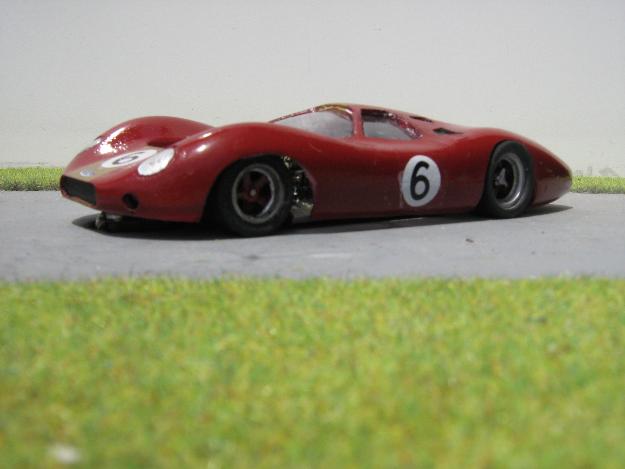
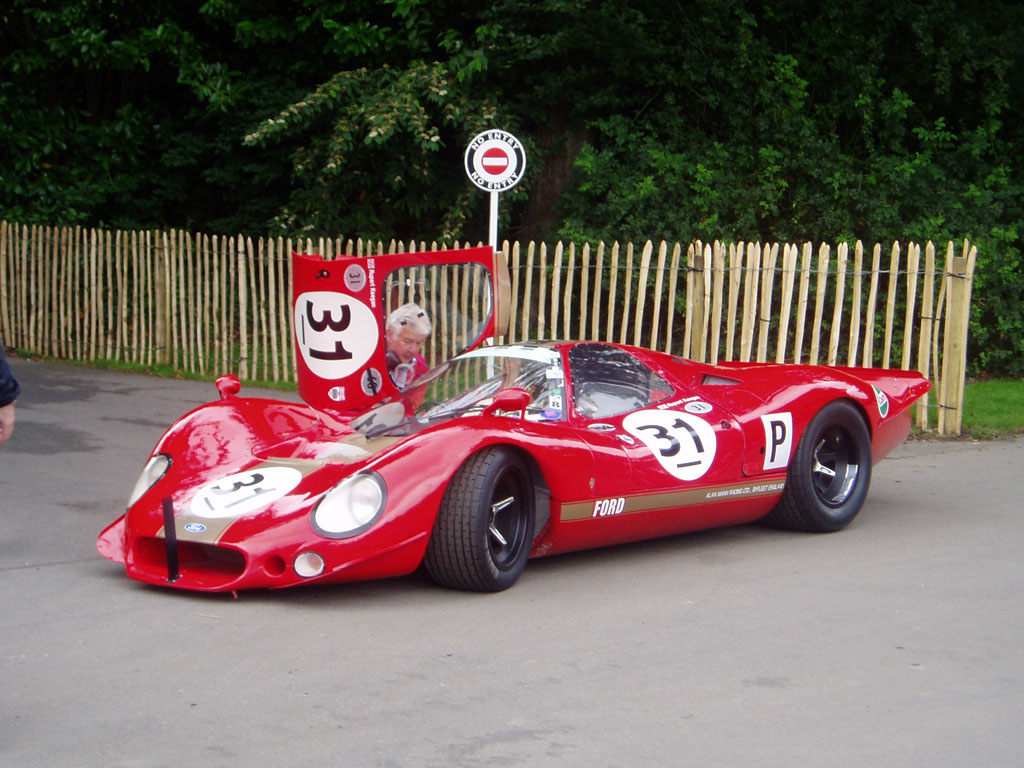
 Ford F3L cars